
If your teeth feel crowded, the goal is not only to make the front teeth look straight — it is to build a plan that fits your bite, gum health, and long-term stability.
Key takeaways
- Crowding is usually treatable with braces or aligners, depending on bite goals.
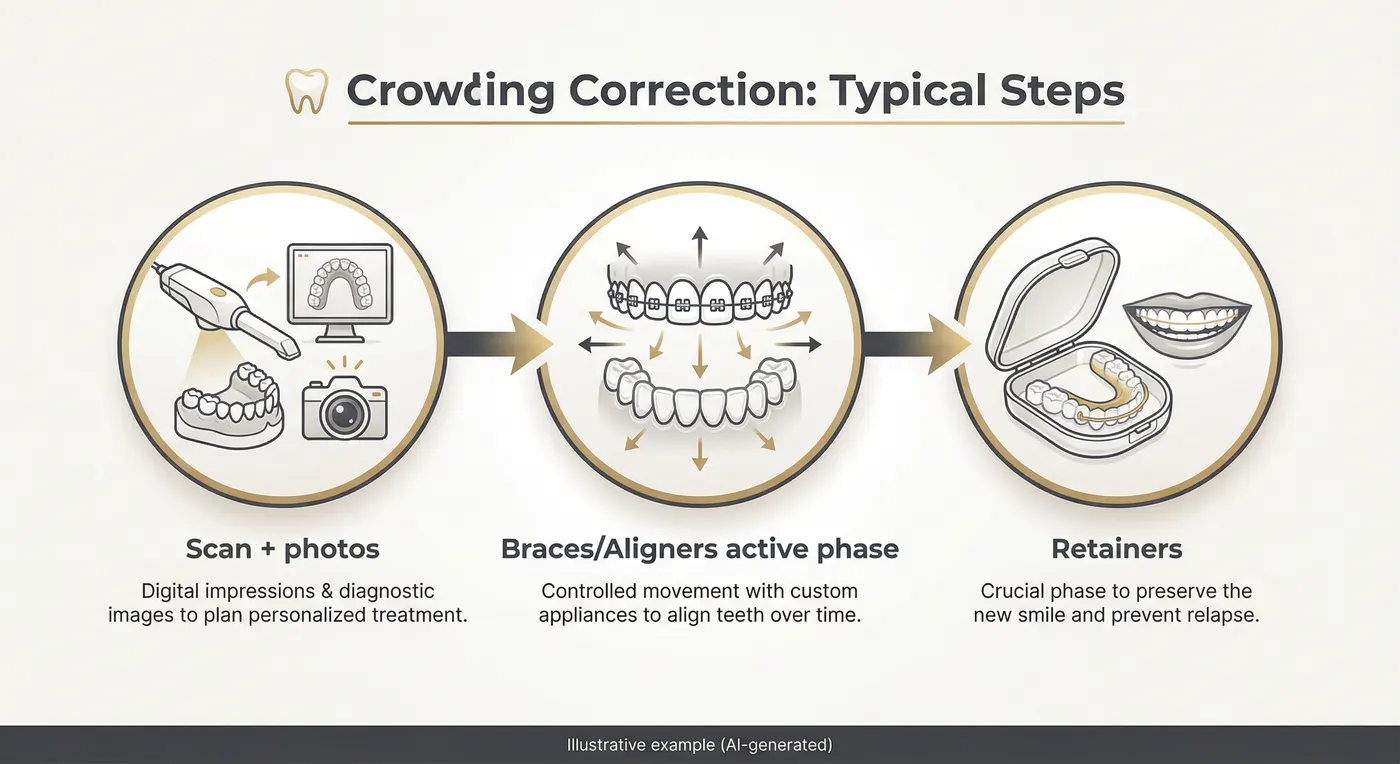
- Long-term stability depends on planning + retention (retainers).
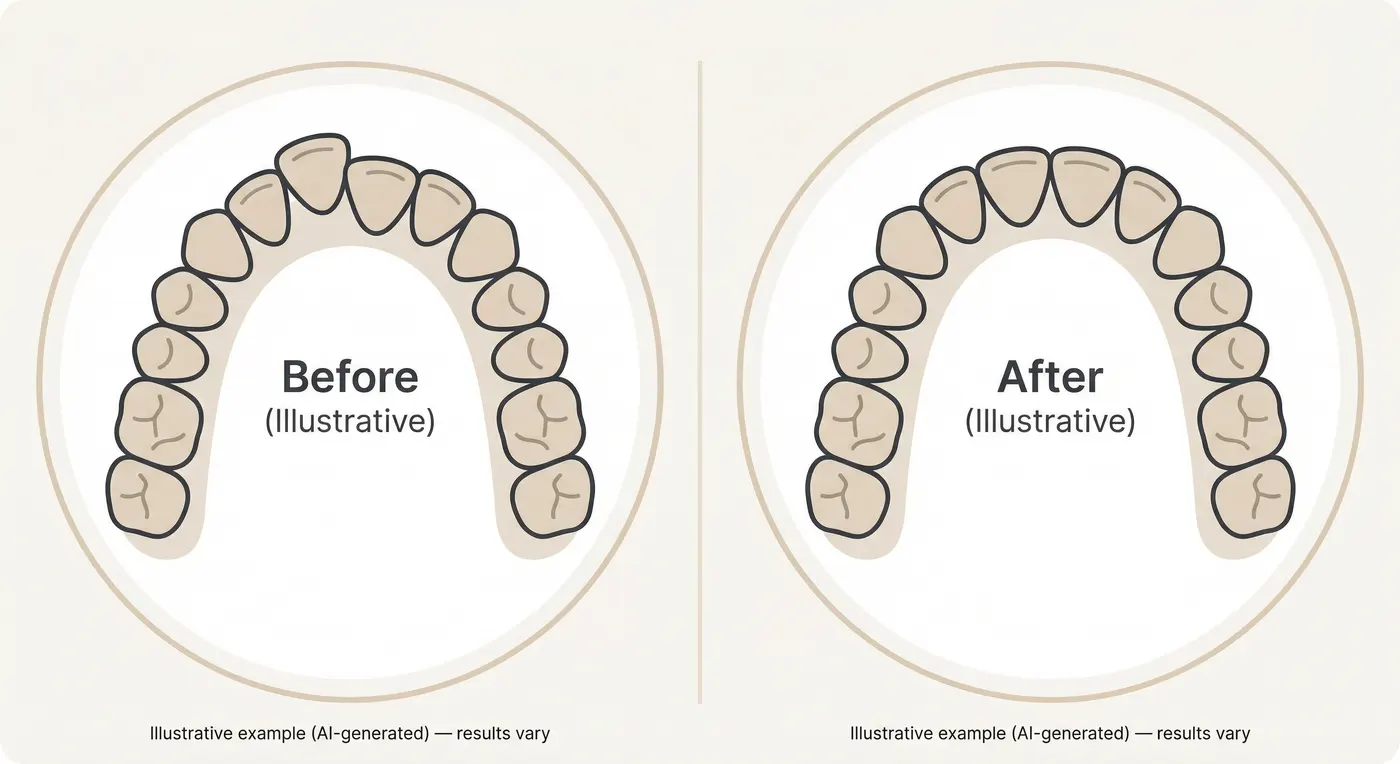
- This page includes an illustrative before/after diagram (not a real patient).
Quick Answer
Mild-to-moderate crowding can often be treated with clear aligners. If your plan needs more complex bite correction, rotations, or vertical movements, braces may be more predictable.
Why Crowding Happens
- Tooth-size vs jaw-size mismatch (common)
- Wisdom teeth timing is not the main cause, but can add pressure in some cases
- Gum health changes and shifting with age
- Relapse after older orthodontic treatment (missing/poor retention)
Treatment Options (What We Typically Consider)
- Aligners — premium choice for aesthetics, requires compliance.
- Braces — fixed control, often best for complex movements.
- IPR — small enamel reshaping to create space (when appropriate).
- Extractions — only when needed for stable results and bite goals.
Timeline (Typical Ranges)
- Mild: a few months to ~1 year
- Moderate: ~12–18 months
- Complex bite correction: 18+ months
Risks / Side Effects (Realistic, Not Scary)
- Soreness after activation / tray change
- Decalcification risk if brushing is poor (especially with braces)
- Small relapse risk without consistent retention
Illustrative Before/After (Not a Real Patient)
The image below is an illustrative example (AI-generated) used to explain typical changes. Real results vary.
Next Step
- If you want a recommendation: Orthodontic evaluation.
- Or book a consult: /contact.
Educational content only. A clinical exam is required for diagnosis and a final treatment plan.